Tsunami Alerts and Evacuation
What is a tsunami alert?
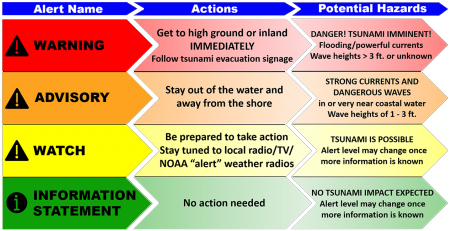
Tsunami messages are issued by the tsunami warning centers to notify emergency managers and other local officials, the public and other partners about the potential for a tsunami following a possible tsunami-generating event. For U.S. and Canadian coastlines, these messages include alerts. There are four levels of tsunami alerts: warning, advisory, watch and information statement:
Tsunami Warning
Take Action
Danger! A tsunami that may cause widespread flooding is expected or occurring. Dangerous coastal flooding and powerful currents are possible and may continue for several hours or days after initial arrival.
Follow instructions from local officials. Evacuation is recommended. Move to high ground or inland (away from the water).
 Tsunami Advisory
Take Action
A tsunami with potential for strong currents or waves dangerous to those in or very near the water is expected or occurring. There may be flooding of beach and harbor areas. Stay out of the water and away from beaches and waterways. Follow instructions from local officials.
 Tsunami Watch
Be Prepared
A distant earthquake has occurred. A tsunami is possible.
Stay tuned for more information. Be prepared to take action if necessary.
 Tsunami Information Statement
No Action Needed
An earthquake has occurred, but there is no threat or it was very far away, and the threat has not been determined. In most cases, there is no threat of a destructive tsunami.
Things can change! As more information arrives, alerts may be upgraded or downgraded accordingly.
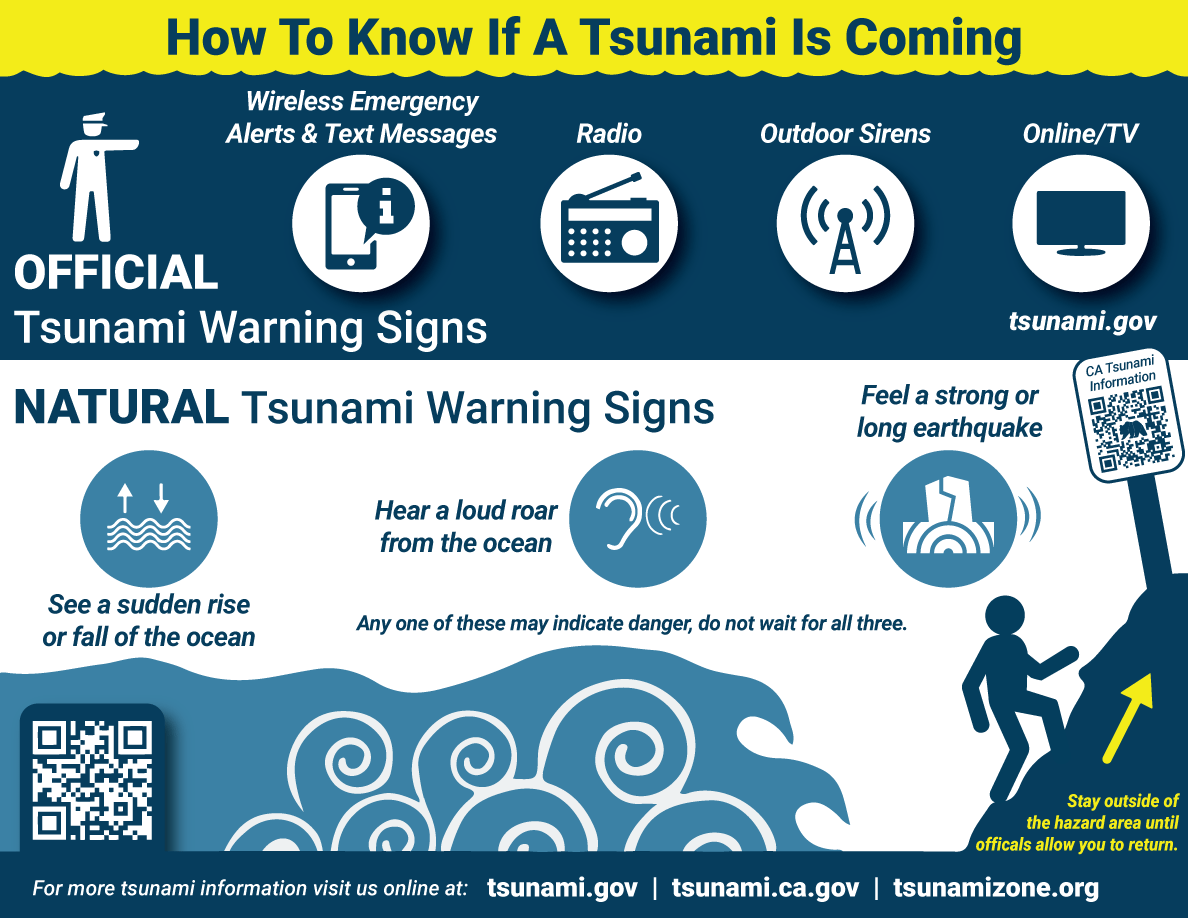
Who will tell me? Tsunami warnings are broadcast through
- local radio and
- television,
- marine radio,
- wireless emergency alerts,
- NOAA Weather Radio and
- NOAA websites (like Tsunami.gov).
- outdoor sirens where available,
- local officials,
- text message alerts
- telephone notifications.
There may not always be enough time for an official warning, so it is important that you understand natural warnings. If you are at the coast and feel a strong or long earthquake, see a sudden rise or fall of the ocean or hear a loud roar from the ocean, a tsunami may follow. This is your warning. Take action and move to a safe place. Do not wait for official instructions.
How will I know?
 Most tsunamis are not one big breaking wave that overruns the shore. They are usually a series of waves behaving similar to a rapidly rising high tide that can continue repeatedly over many hours, and even days. In most cases, the first in the series of waves is not the biggest. A tsunami may start small, relatively speaking, and develop over time. People have been killed most often by subsequent waves, coming hours after the “start of tsunami.” Tsunamis travel faster over the open ocean than they do toward land. In the open ocean the travel a speeds of up to 600 mph, about the speed of a jet. Not all tsunamis are recognizable by the fast recession of water from the shore. Only about 40% of tsunamis produce this natural warning sign.
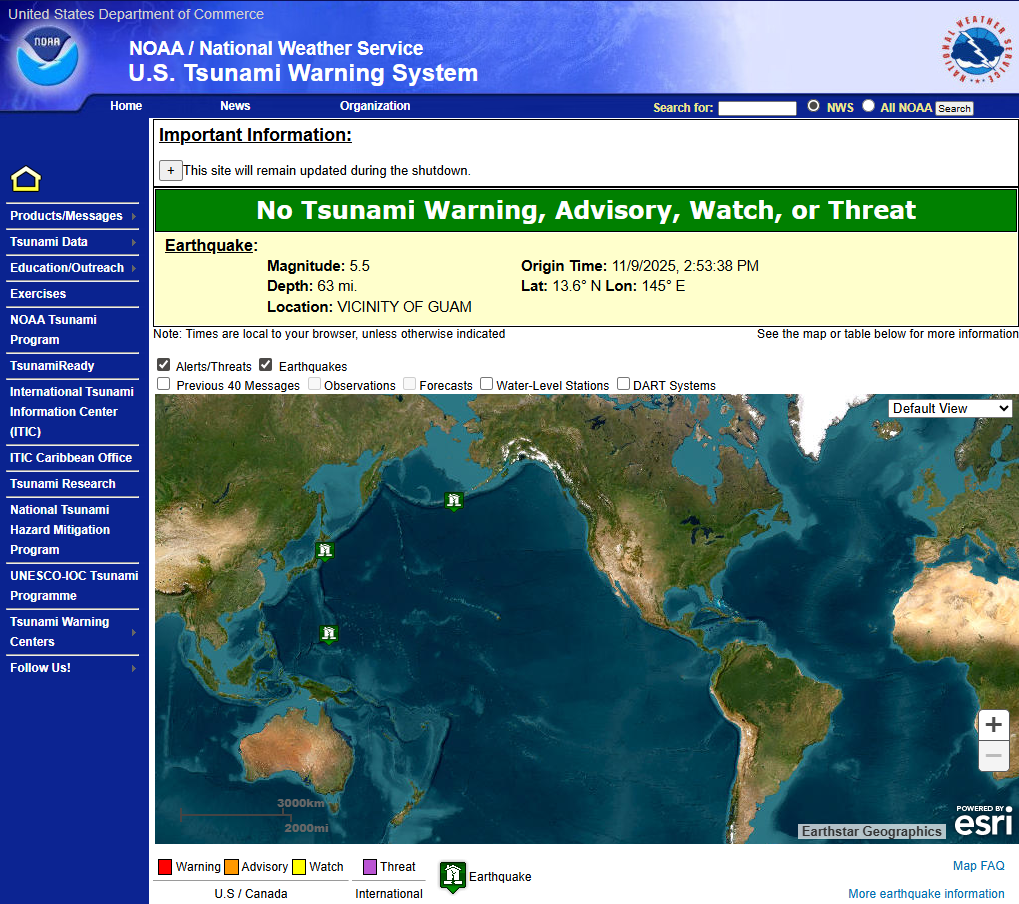
Active Warning in effect?
Information about active tsunami events can be found through the US Tsunami Warning Center. NOAA and the National Weather Service monitor seismic activity in the ocean and areas around the Pacific Rim and alerts the West Coast of potential tsunami activity.
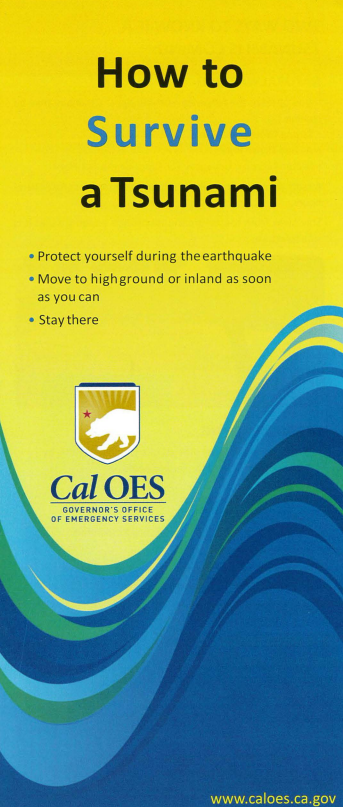
See Cal OES’s How to survive a tsunami brochure!
Natural Warning Signs
Natural warnings may occur prior to a tsunami. In a local source earthquake tsunami, the earthquake is the warning to get to high ground and may occur only a few minutes prior to tsunami impact.
There will be no natural warning for a distant source tsunami. Knowing what to watch for, how to react and where to go in the event of a tsunami is the most effective way to know how to protect yourself and your family.
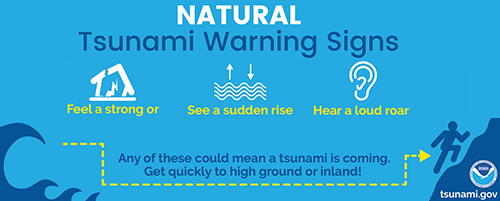
- Be Aware When at the coast know where safe, high ground is located.
- Drop, Cover, Hold On, Go Up When you are near the shore and feel a strong ground shaking that lasts a long time, drop, cover and hold on until the shaking stops. If you are on the coast, the earthquake may have caused a tsunami nearby which could arrive at your location in as little as 5-10 minutes. Go immediately to higher ground or inland (avoiding river valleys). If you are in a tsunami zone marked by signs, follow posted signs to a safe area.
- Unusual Sea Level Fluctuations A noticeable rapid rise or fall in coastal waters is a sign that there may be a tsunami approaching. If you see the water draw out to sea quickly and unexpectedly from a beach exposing the ocean floor (the so-called drawback) or a sudden rise of the sea level, escape immediately to higher ground or inland (avoiding river valleys). If you are in a tsunami zone marked by signs, follow posted signs to a safe area.
- Loud Roar If you hear a loud ocean roar, similar to that of a train or jet aircraft, a tsunami may be approaching, so escape immediately to higher ground or inland (avoiding river valleys). If you are in a tsunami zone marked by signs, follow posted signs to a safe area.
If you observe any of these natural warning signs OR authorities alert you, a tsunami may arrive in minutes and last for eight hours or longer. Never return to the shore until you are given the “all clear” from a reliable source.
Organize an Event in your area.
Discover potential evacuation routes:
• Start in a Tsunami Danger Zone and end in a Tsunami Safe Zone
• Where is high ground?
• How far inland might you need to go to be out of danger?
Take Action:
• Hold a Tsunami Walk with your community.
• Attend a webinar or lecture on tsunamis.
• Update your disaster supplies, insurance, and plans.
• Join the conversation on social media with the hashtag #TsunamiPrep.
Register your community today!
• Be counted as a participant on the TsunamiZone website!
• Be listed with other participants in your area (Optional).
• Be an example that motivates others to participate & prepare.
• Be updated with TsunamiZone news and preparedness tips.
• Be prepared to survive and recover quickly when a tsunami occurs!