
Be Prepared Not Scared
Preparedness refers to activities we do prior to a tsunami to be ready to respond to and recover from significant tsunamis. When it comes to tsunamis, there are simple things you can do to improve the chances you and your loved ones will survive and recover. Anything you do today will be like making a deposit in your survivability savings account for withdrawal in tough times.
Videos
What can I do?
One of the first actions you can take to protect your family is to learn when there is potential for a tsunami.
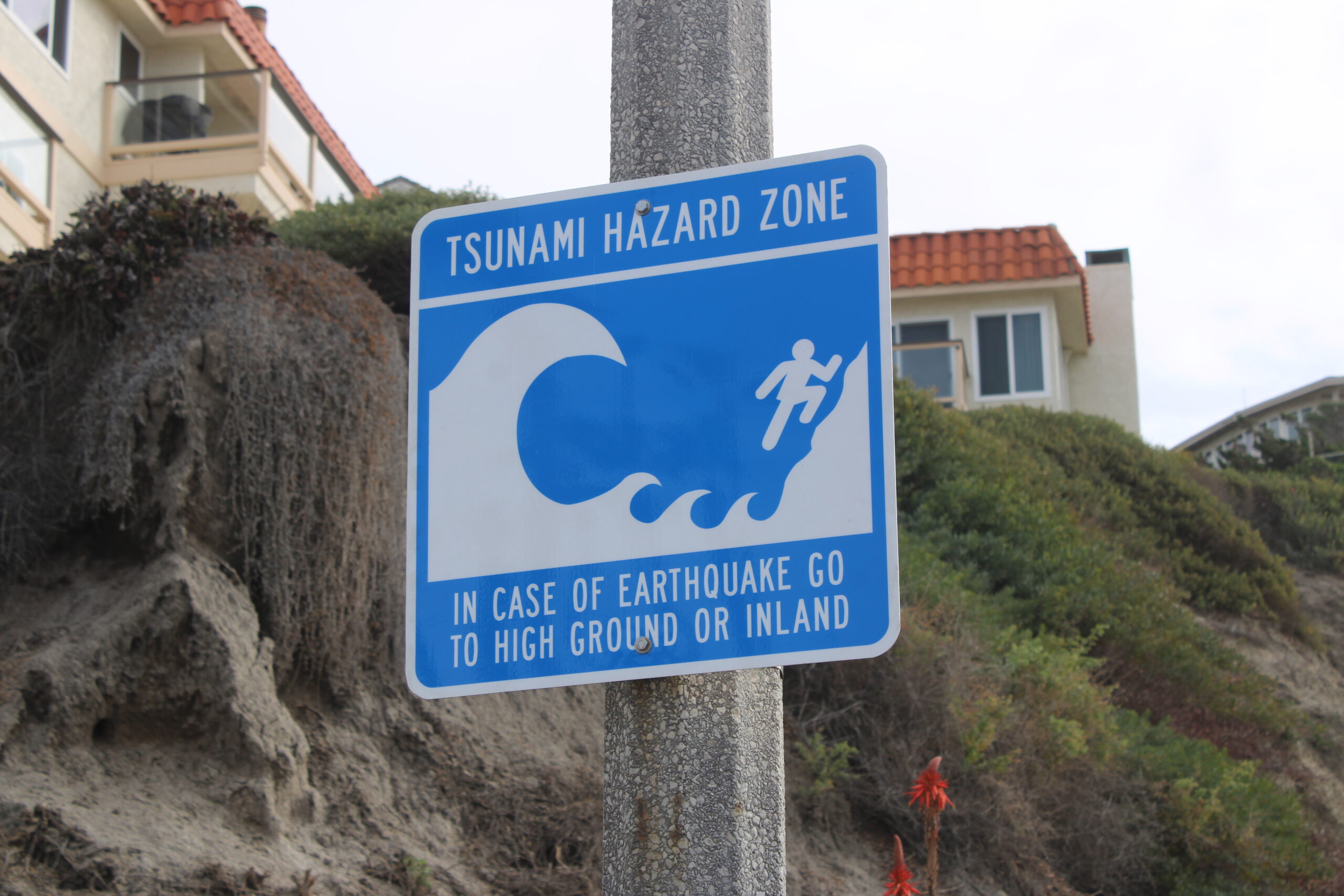
Tsunami hazard warning signs near San Clemente State Beach.
If you are at risk for a tsunami, it is recommended you:
- Plan an evacuation route from your home, school, workplace, or anywhere else you may go that is at risk, for a tsunami. You should be able to reach your safe location on foot within 15 minutes as roads may become impassible or blocked. Local emergency management officials can help advise you of the best route for safety and potential shelter locations.
- Practice your evacuation route. Familiarity may save your life. Be able to follow your escape route at night and during inclement weather. Practicing your plan makes the appropriate response more of a reaction, requiring less thinking during an actual emergency situation.
- Use a NOAA Weather Radio with a tone-alert feature to keep you informed of local watches and warnings. The tone alert feature will warn you of potential danger even if you are not currently listening to local radio or television stations.
- Talk to your insurance agent. Homeowners’ policies do not cover flooding from a tsunami. Ask about the National Flood Insurance Program.
- Discuss tsunami with your family. Everyone should know what to do in case all family members are not together. Discussing tsunamis ahead of time will help reduce fear and anxiety and let everyone know how to respond. Review flood safety and preparedness measures with your family.
If your home is in or near a tsunami zone, you should be prepared to remain evacuated for at least three days (72 hours). Do not return to low-lying coastal areas after an initial tsunami wave has arrived as other waves or surges are likely to follow the first one and each wave cycle can last approximately 20-30 minutes. Dangerous tsunami wave activity can last for many hours and even days. Keep a disaster kit handy in your home, your car, and in your workplace. See Earthquake Country Alliance’s 7 Steps to Earthquake Safety here.
For more information on how to prepare for tsunamis, visit our “Tools and Resources” section.
Preparing Your Workplace
According to the U.S. Bureau of Labor Statistics, American Time Use Survey, in 2013 the average work day for full time employed Americans (age 25-54 with children) was 8.7 hours. A tsunami could occur anytime in that 8.7 hours. Are you prepared? Preparing your workplace is just as important as preparing your home. There are many ways to improve your safety in the event of a tsunami. Here are just a few suggestions:
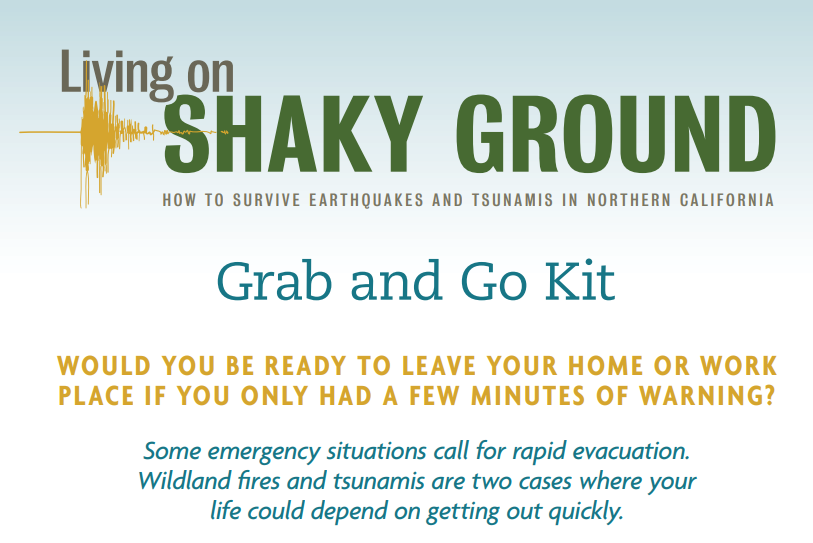
Click to learn more.
- Know if your workplace is in a tsunami hazard zone. Visit “My Hazards” and enter the address location.
- Be familiar with your company’s emergency plan.
- Know your local evacuation routes and evacuation sites.
- Keep a pack of personal supplies (including walking shoes) that can be grabbed quickly and easily.
- Keep a list of emergency numbers handy.
- Listen to your radio for safety updates and an official “all clear” message before returning.
For more ideas and information about preparing your workplace, visit the “Tools and Resources” section.
Tsunami Preparedness for Businesses and Organizations
 A workplace should follow accepted tsunami safety guidelines, but have in place a personalized, well-rehearsed plan to minimize injury and damage during a tsunami. Developing, and putting into place, a Disaster Plan will not only protect employees but will help minimize the financial impact of a tsunami and help you recover more quickly.
Many organizations play a role in assisting business owners with their disaster planning. See our “Tools and Resources” section below to get started preparing before the next earthquake with sample plans, checklists, suggested educational programs for employees, exercise methods, and how to improve plans that are already in place.
Tsunami Preparedness for Teachers and Schools
While tsunamis have occurred throughout history, our knowledge and understanding of preparing for them is much more informed in recent years due to advances in science and technology to study them. More than 70 tsunamis have impacted California in the past 150 years, with recent impacts occurring in 2011, 2010, 2009, 2006, 1964, and 1960.
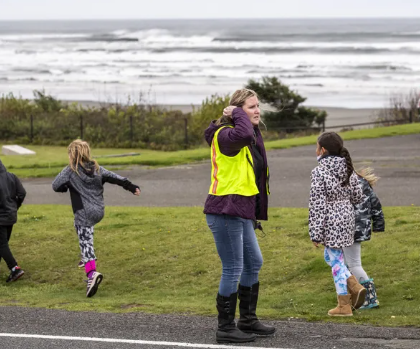
Through planning and education, we are increasingly in a position to ensure the current and upcoming generations make tsunami preparedness a regular part of their routine. As actions from learning to identify areas at risk of tsunami to practicing a “tsunami walk” become the norm, students can take this information and teach their families and friends.
As we learn more, our partners are applying that knowledge to assist teachers, parents and schools in the education of students of all ages and abilities by providing lesson plans, curriculum, activities, games, materials, publications and a multitude of other resources. The Next Generation Science Standards (NGSS) address natural hazards including tsunamis, so teachers can help plan lessons that meet education standards.
San Diego County OES – Tsunamis: Know What to Do!
Tsunami Preparedness for Government Agencies and Tribes
The Earthquake, Tsunami and Volcano Program is responsible for the supporting all California governmental agencies to ensure the protection and safety of the populace in the event of a tsunami. To this end, the Program staff are available to provide guidance and assistance to our partners in the preparation of plans to mitigate and plan for, respond to and recover from tsunamis impacting our State. In addition, many resources and guidance materials are available for review in the “Tools and Resources” Section below to walk developers through the planning process.
Being Tsunami Ready
 Check out the video prepared by the California Geological Survey about Tsunami Hazards.